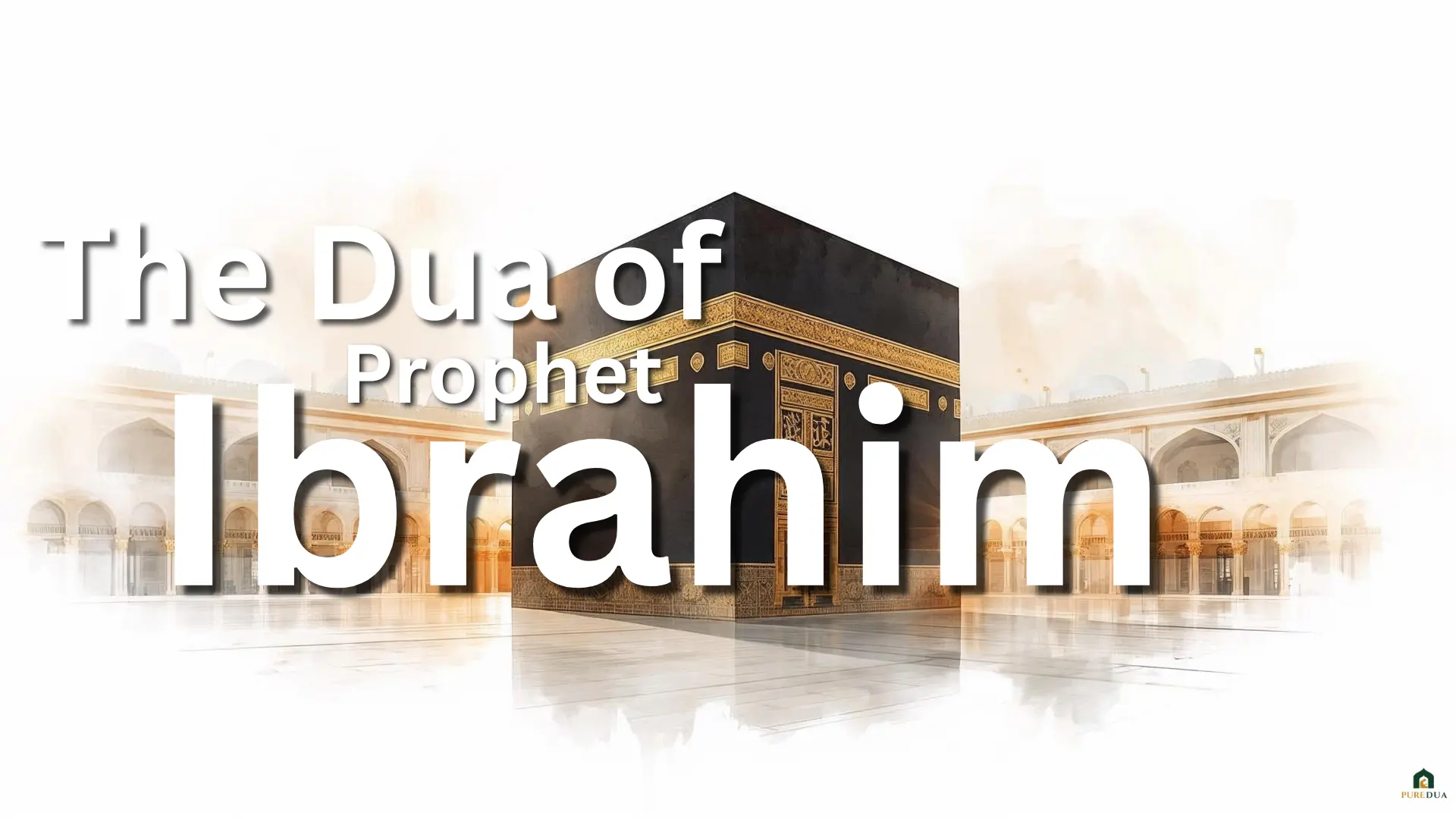
Life of Prophet Ibrahim (AS)
The Man Allah Called His Friend
Prophet Ibrahim عليه السلام is the only person in the Quran Allah calls His intimate friend — Khalilullah. Born into a family of idol-makers, he rejected idolatry through pure reason, smashed his people's gods, walked into fire, left his wife and infant son in an empty desert, and raised the knife above his son when Allah tested him. He built the Ka'bah, established Hajj, and became the ancestor of nearly every prophet who followed. His story is not defined by one trial — it is defined by a lifetime of them. And every single time, he passed. This is his story.
📖 In This Guide:
- 👑 Ibrahim's Unique Titles — Khalilullah, Imam & Ummah
- 🌙 How Ibrahim Reasoned His Way to Tawhid
- 💬 How Ibrahim Confronted His Father About Idols
- 🔨 Why Ibrahim Smashed the Idols — and What Happened Next
- 🔥 How Ibrahim Survived Being Thrown into the Fire
- 🏜️ Why Ibrahim Left Hajar and Baby Isma'il in the Desert
- 🐏 The Command to Sacrifice His Son
- 🕌 How Ibrahim and Isma'il Built the Ka'bah
- 🔗 How Ibrahim Connects the Entire Prophets Series
- ✨ 8 Timeless Lessons for Muslims Today
- ❓ Frequently Asked Questions
👑 Ibrahim's Unique Titles — Khalilullah, Imam & Ummah
Allah honored Ibrahim with three titles given to no other human in the Quran. Together they define why his story stands apart from every other prophet.
📌 What "Khalil" Really Means: The word comes from "khalla" — to penetrate deeply, completely, without remainder. Ibrahim's love for Allah filled every space within him. This is why every major act of his life — migration, fire, desert, sacrifice, Ka'bah — is a different facet of the same thing: a man in whom love for Allah left no room for anything else.
Ibrahim's Prophetic Legacy
🌿 Through Isma'il
The Arabs — and ultimately the Prophet Muhammad ﷺ. The Prophet said: "I am the dua of my father Ibrahim" — referring to Ibrahim's supplication in 2:129 asking Allah to send a messenger from among Isma'il's descendants
🌿 Through Ishaq
Ya'qub, Yusuf, Musa, Dawud, Sulayman, Isa (peace be upon them all). Nearly every prophet in Islamic history descended through this line
🌙 How Ibrahim Reasoned His Way to Tawhid
Ibrahim was born into the worst possible environment for a monotheist — his own father Azar was not merely an idol worshipper but an idol maker and seller. Yet his pure fitrah rejected it from the beginning. His logical journey to tawhid — described in Surah Al-An'am — is one of the most beautiful passages of rational theology in any scripture.
He saw a star at night
"This is my lord." But when it set: "I do not like those that disappear." (Surah Al-An'am 6:76) — Anything subject to rising and setting cannot be God
He saw the moon rise
"This is my lord." But when it set: "Unless my Lord guides me, I will surely be among those gone astray." (6:77) — Larger, brighter — still not enough
He saw the sun — the largest of all
"This is my lord; this is greater." But when it set: "O my people, I am free from what you associate with Allah." (6:78) — Even the greatest created thing disappears
His conclusion — still one of the clearest proofs for monotheism in history
"Indeed, I have turned my face toward He who created the heavens and the earth, inclining toward truth, and I am not of those who associate others with Allah." (6:79)
📌 The Logic That Changed Everything: Anything that rises and sets — stars, moons, suns, nations, empires — is subject to time and change. God cannot be subject to time and change. Therefore the Creator of all these things — permanent, unchanging, eternal — is the only One who can be God. This argument, made 4,000 years ago, remains one of the clearest proofs for tawhid in human history.
💬 How Ibrahim Confronted His Father About Idols
Ibrahim's conversation with his father Azar is one of the most emotionally delicate in the Quran — a son who loves his father, disagrees with him completely, and still addresses him with the greatest tenderness.
His father's response was a threat of death: "If you do not desist, I will surely stone you, so avoid me a prolonged time." (Surah Maryam 19:46)
And Ibrahim's response to being threatened with death — one of the most remarkable sentences in the Quran:
"Peace will be upon you. I will ask forgiveness for you of my Lord. Indeed, He is ever gracious to me."
— Surah Maryam 19:47 · No anger. No ultimatum. "Peace be upon you. I will make dua for you."📌 The Da'wah Lesson: Ibrahim spoke the clearest truth — idol worship is absurd and harmful — while maintaining the deepest respect for his father. He made dua for his father's forgiveness after being threatened with death. Firmness about truth. Softness in delivery. Genuine love for the person you are trying to guide. This is the prophetic model.
🔨 Why Ibrahim Smashed the Idols — and What Happened Next
When his people left for a festival, Ibrahim went to their temple alone. He mocked the idols — "Do you not eat? What is wrong with you that you do not speak?" — then destroyed them all, except the largest one.
When the people confronted him, Ibrahim laid a masterful logical trap:
For a moment, they admitted it — privately, to each other. They knew their gods could not have done it. They knew Ibrahim was right. Then pride overrode reason, and they reversed themselves.
📌 Why This Was Not Mere Vandalism: It was a controlled demonstration of one devastating truth — if your god cannot protect itself from one man with a hammer, how could it possibly protect you from anything? The idols' silence in the face of destruction was the most powerful sermon Ibrahim ever gave — because it required no words.
🔥 How Ibrahim Survived Being Thrown into the Fire
Unable to defeat Ibrahim with logic, his people turned to force. King Nimrod decreed: "Burn him and support your gods — if you are to act." (Surah Al-Anbiya 21:68). They built a fire so enormous they used a catapult to throw Ibrahim in — no one could get close enough by hand.
What Did Ibrahim Say as He Was Thrown?
The hadith literature records that Jibril appeared to Ibrahim in the air and asked: "Do you need anything?"
"From you, no. From Allah, yes — but He already knows my condition."
— He would not ask even the angel. His trust in Allah left no room for any intermediary.🔥 What the Fire Did
Became cool but not cold — cold itself could harm him. Became safe — it did not burn. According to narrations, only his chains burned off. He sat unharmed in an inferno that killed birds above it.
💡 The Real Lesson
Allah did not prevent Ibrahim from being thrown in. He let it happen — and then made the fire powerless. Divine protection is not the removal of trials. It is the removal of the trial's power to harm those He is with.
🏜️ Why Ibrahim Left Hajar and Baby Isma'il in the Desert
After migrating from Babylon, Ibrahim received a command that tested not his courage but his love. Allah commanded him to take his wife Hajar and their infant son Isma'il to a barren, waterless valley — present-day Makkah — and leave them there.
He obeyed. When Hajar followed him asking "Did Allah command you to do this?" — Ibrahim said: "Yes." Her response — perhaps the most powerful expression of tawakkul in the entire seerah:
"Then He will not neglect us."
— Hajar turned back. Ibrahim kept walking. When they could no longer see him, he stopped and made the dua of Surah Ibrahim 14:37.What Happened Next Became the Origin of Zamzam
The water ran out — baby Isma'il cried from thirst
Hajar ran desperately between the hills of Safa and Marwah seven times searching for any sign of help or water
Water gushed from beneath the baby's feet
This became the well of Zamzam — which has flowed continuously for over 4,000 years. The most drunk water in human history began with a mother's trust in Allah
Tribes settled near the water — Makkah began
The barren valley became the most visited place on earth — because one woman said "He will not neglect us" and meant it completely
🐏 The Command to Sacrifice His Son
When Isma'il had grown into a young man — a son Ibrahim had waited decades for, left in the desert, and miraculously been reunited with — Ibrahim received a dream. Prophetic dreams are divine revelation.
Isma'il's response — the son matched the father:
"O my father, do as you are commanded. You will find me, if Allah wills, of the steadfast."
— Surah As-Saffat 37:102 · Do what Allah commanded. I will be patient.📌 What Allah Was Really Testing: Allah never intended for Isma'il to die. He was testing whether Ibrahim loved Allah more than he loved his son — whether anything could compete with his love for Allah. When Ibrahim proved the answer was no, Allah gave Isma'il back. The test was never about the son. It was about the heart.
Every year on Eid al-Adha — observed by over a billion Muslims — this moment is commemorated. Ibrahim's willingness to sacrifice what he loved most for Allah has been replayed symbolically across 4,000 years, and will continue until the Last Day.
🕌 How Ibrahim and Isma'il Built the Ka'bah
📌 The Lesson About Acceptance: Ibrahim and Isma'il did not assume their deed was automatically worthy. While building the Ka'bah — the holiest structure on earth — their words were: "Please accept this from us." Never assume. Always ask. The deed matters — but Allah's acceptance of the deed matters more.
The Call to Hajj — and Its 4,000-Year Answer
After completing the Ka'bah, Allah commanded Ibrahim to call humanity to Hajj. He called from Makkah — and Allah caused that call to reach every soul that would ever come. Every Hajj performed since is an answer to Ibrahim's voice.
🔗 How Ibrahim Connects the Entire Prophets Series
Ibrahim is not just one prophet among many — he is the pivot point of the entire prophetic series in Islamic history.
| Prophet | His Role in the Series | His Connection to Ibrahim |
|---|---|---|
| Adam عليه السلام | Established the first human civilization and the first repentance | Origin of humanity — Ibrahim is his distant descendant |
| Nuh عليه السلام | First messenger to restore tawhid — rebuilt civilization on monotheism after the flood | Ibrahim's mission continued what Nuh's flood reset |
| Lut عليه السلام | Sent to Sodom — to the most corrupt society simultaneously with Ibrahim | Ibrahim's own nephew — their stories are intertwined in the Quran |
| Ibrahim عليه السلام | The great restorer of pure tawhid — his descendants became the chain of prophethood itself | Father of Prophets — the pivot of the entire series |
✨ 8 Timeless Lessons from Prophet Ibrahim for Muslims Today
Ibrahim did not inherit his faith — he reasoned his way to it. Islam does not ask you to check your mind at the door. It invites you to use it fully until you arrive at the truth.
Ibrahim stood against his father, his people, and his king. The closest relationships did not override the truth. Honor your family — but do not let love for them lead you into what Allah has prohibited.
Ibrahim called his father "ya abati" — my dear father. He asked questions. He offered dua for him even after being threatened with death. Clarity and gentleness are not opposites — both are required.
His argument against idols — if it cannot defend itself, how can it protect you? — is still the clearest possible argument against false worship. The truth of Islam does not fear scrutiny.
In the fire, Ibrahim would not ask even the angel for help. He trusted Allah alone. The more completely you trust Allah, the less you need human approval, validation, or rescue.
Ibrahim loved Isma'il more than any other human — and that is precisely what he was asked to sacrifice. Allah tests you with what matters most. Not to take it away, but to find out if it has taken the place that belongs to Allah alone.
While building the Ka'bah — the holiest structure on earth — Ibrahim still said "Our Lord, accept this from us." Never assume. Always ask. The fear that your deeds may not be accepted is the mark of a heart that knows who Allah is.
Ibrahim built the Ka'bah 4,000 years ago. It still stands. Billions still circle it, drink from its well, run between its hills. Build something that will continue to benefit people after you are gone — righteous children, useful knowledge, deeds that serve Allah's religion.
❓ Frequently Asked Questions
Everything He Gave — Everything He Received
Ibrahim left his father for Allah. He left his homeland for Allah. He walked into fire for Allah. He left his wife and baby in an empty desert for Allah. He raised the knife above his son for Allah. He built the Ka'bah for Allah.
And at every single step, Allah gave him back more than he had given up.
This is what happens when you give everything to Allah. Not as a transaction — but because you love Him so completely that keeping anything back simply does not occur to you.
May Allah grant us even a fraction of Ibrahim's submission, a drop of his tawakkul, a whisper of his love for Allah, and the honor of following his path.
آمِين يَا رَبَّ الْعَالَمِين