Dua Asking for Jannah
The Supplication That Asks for Paradise AND for Everything That Leads There
This dua contains one of the most strategically wise requests in Islamic supplication literature. When most people ask for Jannah, they ask for the destination. This dua asks for the destination AND the path. "Wa ma qarraba ilayha min qawlin aw 'amal" — and whatever brings me closer to it of statements or actions. By asking for what brings you closer to Jannah in every word and deed, the dua is asking Allah to guide, enable, and bless the entire journey. The same structure mirrors in the refuge from the Fire. This makes it functionally a dua for your entire life's conduct, not just its eternal outcome.
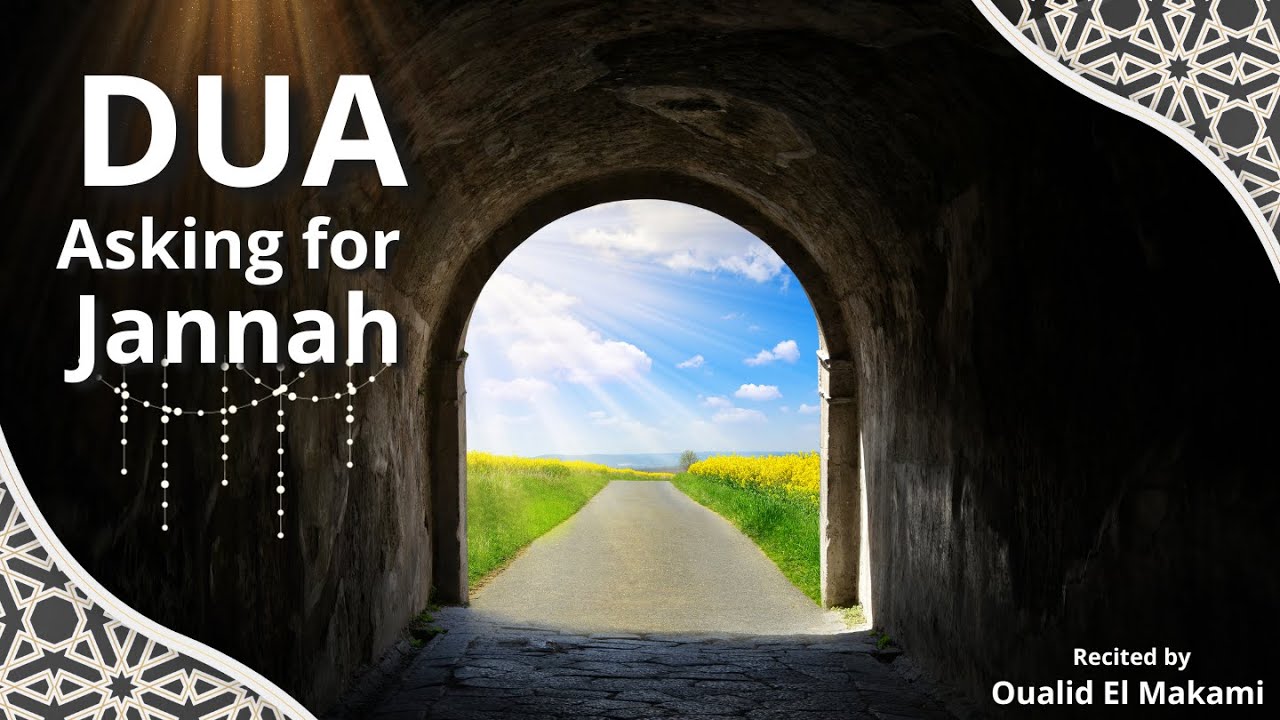
This dua asks for Jannah — directly, explicitly, by name. And then it asks for every word and deed that moves toward it. It seeks refuge from the Fire — directly, explicitly. And then from every word and deed that moves toward it. The destination. And the entire direction of the life that leads there.
Say it every day. Because every day contains words and deeds. And every word and deed moves you in one of two directions. This dua asks Allah to make sure yours move in the right one.
🤲 The Complete Dua for Jannah
wa ma qarraba ilayha min qawlin aw 'amal
wa a'udhu bika min al-nar
wa ma qarraba ilayha min qawlin aw 'amal
and for whatever brings me closer to it of statements or actions.
And I seek refuge with You from the Fire
and from whatever brings me closer to it of statements or actions."
The Perfect Mirror Structure — Nothing Left Out
📌 The symmetry is not decoration — it is the complete Islamic map of a life correctly lived: oriented toward Jannah, moving toward it in every word and deed, and protected from every word and deed that moves in the wrong direction. The dua covers both the destination and the direction — in both cases.
🔍 Key Phrases Explained
"Al-jannah" — literally "the garden," the eternal abode of those who believed and acted righteously. The Prophet ﷺ specifically taught: "When you ask Allah, ask for al-Firdaws al-A'la — the highest Paradise, for it is the middle of Paradise and the highest part of it, and above it is the Throne of the Most Merciful, and from it spring the rivers of Paradise." (Sahih Bukhari). The correct Islamic approach is to ask for the highest. When you say "al-jannah," intend Firdaws al-A'la. He also said: whoever asks for Paradise three times, Paradise itself intercedes for them — "O Allah, admit him." Every sincere asking for Jannah is received.
"Qarraba" — to bring near, to draw close, to reduce the distance between the person and their destination. "Min qawlin aw 'amal" — of statements or actions. Every human act is either speech or action — "qawl aw 'amal" covers the entire scope of human conduct. This phrase asks Allah for: every word of dhikr, Quran, truth, and kindness that moves toward Jannah; every act of prayer, fasting, charity, and patience that moves toward Jannah; the ability and consistency to say those words and perform those deeds; and the blessing in them that makes them genuinely count. In one phrase, the dua has asked for the entire Islamic life — every righteous word and deed, blessed and enabled by Allah, moving consistently toward Paradise.
📌 Asking for the path, not only the destination: The person who only asks for Jannah is asking for the ending. The person who asks for "what brings me closer of words and deeds" is asking for the entire life that earns it. This is the more complete asking — reflecting the Islamic understanding that Jannah is earned through a life of words and deeds guided by Allah from start to finish.
The exact structural mirror of the Jannah half — but for seeking refuge. Just as Jannah is directly asked for by name, the Fire is directly sought refuge from by name. The direct seeking of refuge has a specific promised response: "Whoever seeks refuge from the Fire three times, the Fire will say: 'O Allah, protect him from the Fire.'" (Tirmidhi). And then "ma qarraba ilayha" — every word and deed that moves toward the Fire: lying, backbiting, abandonment of prayer, heedlessness, disobedience, actions that harm self or others. The dua seeks refuge from the entire Islamic life badly lived — every wrong word and wrong deed that moves away from Jannah.
🌿 What Brings Closer to Jannah — And What Brings Closer to the Fire
The dua asks for "whatever brings me closer to Jannah of statements or actions" and seeks refuge from "whatever brings closer to the Fire." What does each category contain?
📌 Every word and deed has a direction. Islamic tradition teaches that nothing is truly neutral — every action and every word either moves a person closer to Jannah or closer to the Fire. The question of every moment is: does this word, this action, this choice — move me toward Paradise or toward the Fire? This dua places that question at the center of the asking, and asks Allah to ensure every word and deed lands in the right category.
🌿 The Quranic and Prophetic Vision of Jannah
The Prophet ﷺ said: "In Paradise there are things that no eye has seen, no ear has heard, and no human heart has imagined." (Sahih Bukhari). The human imagination cannot encompass what awaits — which is part of what makes asking for it the most important asking possible.
And about Jannah's ultimate gift, the Prophet ﷺ said: "When the people of Jannah enter Jannah, Allah will ask: 'Do you want anything more?' They will say: 'Have you not brightened our faces? Have you not made us enter Jannah and saved us from the Fire?' Then He will lift the veil — and they will not have been given anything more beloved to them than looking at their Lord." (Sahih Muslim). Jannah's ultimate gift is the vision of Allah. This is what this dua asks for. Make it sincerely.
🕌 When to Recite This Dua
Every Day — Morning and Evening — Three Times
The Prophet ﷺ said whoever asks for Paradise three times, Paradise intercedes for them. Making this dua three times in morning and evening adhkar ensures consistent asking — and consistent orientation toward the correct direction for all words and deeds.
After Every Obligatory Prayer
Five prayers a day, five opportunities to ask for Jannah and seek refuge from the Fire. The Prophet ﷺ specifically recommended making this asking a regular post-prayer practice. Five times daily, the direction is reset.
When Temptation Arises — Before a Wrong Word or Deed
"Wa a'udhu bika min al-nar wa ma qarraba ilayha min qawlin aw 'amal." When you feel pulled toward a word or action you know is wrong — this phrase is the immediate refuge. You are seeking protection specifically from the word or deed that would bring you closer to the Fire.
In the Last Third of the Night — Tahajjud
The most sincere, most powerful time for any dua. Asking for Jannah in the stillness before Fajr — when Allah descends and asks who is calling — is placing the most important request at the most receptive moment.
When Visiting the Grave or Attending a Funeral
Reminders of death naturally orient the heart toward the Hereafter. After a funeral or cemetery visit, this dua is especially powerful and sincere — the reality of death makes asking for Jannah feel most urgent and most honest.
When Reading About Jannah in the Quran
Every time you read a verse describing Paradise — pause and make this dua. Let the Quranic description of Jannah fuel the sincerity of the asking. Let reading about it become an act of asking for it.
✨ 5 Benefits of This Dua for Jannah
"Wa ma qarraba ilayha min qawlin aw 'amal" — not just Jannah, but every word and deed that brings closer to it. The dua is functionally a request for an entire righteous life — every word and action guided, enabled, and blessed by Allah to move in the right direction.
"Whoever asks Allah for Paradise three times, Paradise will say: O Allah, admit him." And "whoever seeks refuge from the Fire three times, the Fire will say: O Allah, protect him." (Tirmidhi). This dua contains both requests — making both intercessions available in every recitation.
"Min qawlin aw 'amal" — statements or actions. Every human act is either speech or action. The dua asks for the right direction in every category of conduct — no dimension of behavior is excluded from the asking or the seeking of refuge.
Jannah asked for → its pathway asked for. Fire sought refuge from → its pathway sought refuge from. The symmetrical structure ensures both the destination and the direction are addressed — in both cases. Nothing is left to one side of the Islamic map.
Making this dua a daily practice gradually reorients the heart toward its correct priority. The person who asks for Jannah every morning is not someone who will easily compromise for worldly gain. The daily asking trains the perspective: the goal is there. Every word and deed should move toward it.
This is not a dua made by someone who has already earned Jannah through perfect deeds. It is a dua asking Allah to guide and enable the words and deeds that earn it. The asking itself is an act that moves toward Jannah. Say it — especially when your deeds feel insufficient.
❓ Frequently Asked Questions
Every Day Contains Words. Every Day Contains Deeds. Ask Allah to Make Them Move in the Right Direction.
Every word and every deed is moving in one of two directions. This dua asks Allah — explicitly, every day — to make sure yours move in the right one.
Not just the destination. The direction of every word and deed between now and there.
Say this dua every day. Morning and evening. Three times. Before the words of the day begin. After the deeds of the day are done. Because the person who asks for Jannah consistently is not asking passively — they are orienting. Every asking is a reorientation. And the person whose days start and end correctly is the person moving in the right direction.
May Allah give us Jannah and give us every word and deed that brings us closer to it. May He protect us from the Fire and from every word and deed that moves toward it. And may He make us among those who look upon His face in the highest Paradise.