
Eid Takbeer | The Complete Eid Glorification in Arabic with Meaning | PureDua
📿 Duas & Dhikr

Eid Takbeer

The Complete Glorification of Allah on the Days of Celebration

⚡ Quick Answer — The Complete Eid Takbeer · Eid al-Fitr & Eid al-Adha
اللهُ أَكْبَر · اللهُ أَكْبَر · اللهُ أَكْبَر
Allahu Akbar · Allahu Akbar · Allahu Akbar
لَا إِلَهَ إِلَّا اللهُ · اللهُ أَكْبَر، اللهُ أَكْبَر · وَلِلَّهِ الْحَمْد
La ilaha illallah · Allahu Akbar, Allahu Akbar · wa lillahi al-hamd
"Allah is the Greatest, Allah is the Greatest, Allah is the Greatest. There is no god but Allah. Allah is the Greatest, Allah is the Greatest. And to Allah belongs all praise."
— Said from the night of Eid until the Eid prayer · Quran 2:185 · Eid al-Fitr & Eid al-Adha · 5 Parts total below
📌 Information Gain — What Most Articles Miss

The phrase "sadaqa wa'dahu wa nasara 'abdahu wa a'azza jundahu wa hazama al-ahzaba wahdahu" is not originally from the Eid context. The Prophet ﷺ said it after completing Sa'i during Hajj and Umrah (Sahih Bukhari, Sahih Muslim), and scholars later incorporated it into the Eid Takbeer. Its inclusion is a profound theological acknowledgment: every Eid is itself a fulfillment of Allah's promise. The completion of Ramadan, the fulfillment of Hajj — both are victories He enabled alone. Saying "sadaqa wa'dahu" on Eid acknowledges that the celebration is not human achievement — it is divine promise fulfilled.
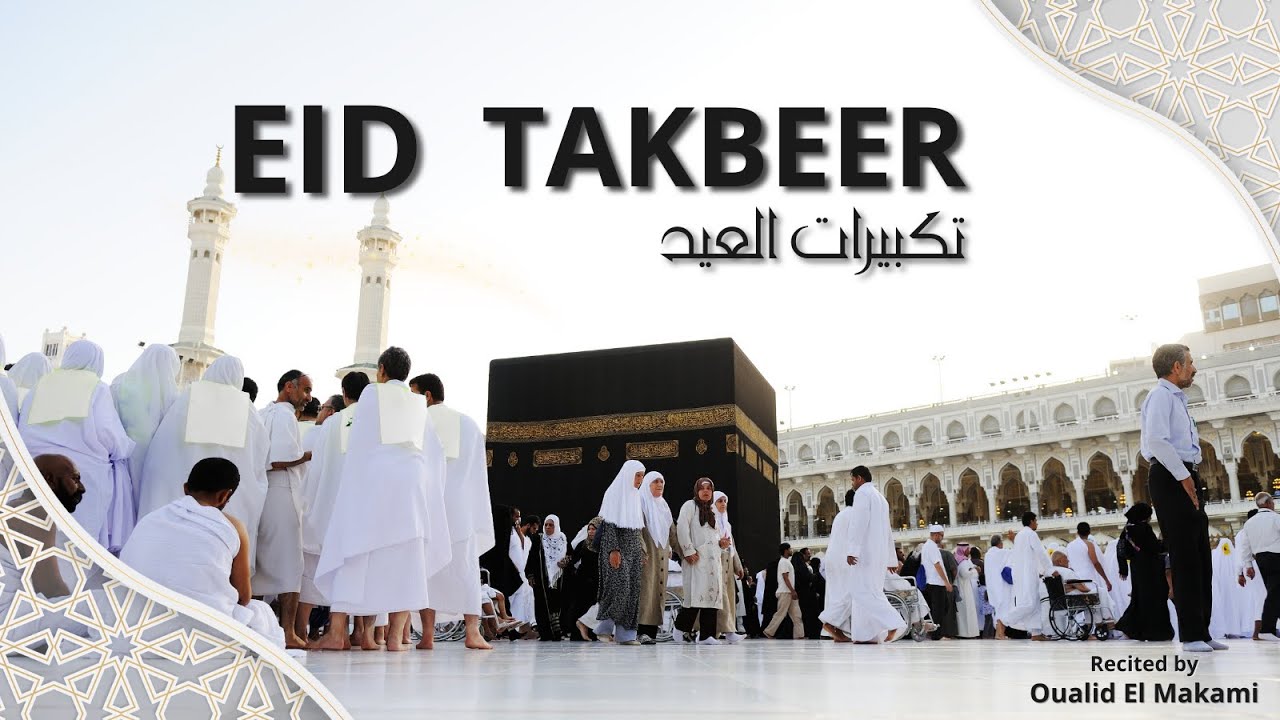
🎧 Listen — Complete Eid Takbeer recited by Oualid El Makami
Complete Eid Takbeer recited by Oualid El Makami — PureDua
Play Recitation

Eid is not just a day of celebration. It is a day of declaration. The word "Takbeer" comes from "Allahu Akbar" — Allah is the Greatest. The entire Eid is framed in this declaration: greater than the month that just ended, greater than the sacrifice being made, greater than the occasion being marked — Allah is the Greatest.

The streets fill with this sound on Eid morning. The masjids overflow with it. It is not merely an expression of joy — it is the Islamic understanding of what Eid is: a day when the remembrance of Allah is the celebration.

🌙 The Complete Eid Takbeer — All Five Parts

١
The Opening Takbeer The core declaration heard in every street and masjid on Eid
اللهُ أَكْبَر، اللهُ أَكْبَر، اللهُ أَكْبَر لَا إِلَهَ إِلَّا اللهُ اللهُ أَكْبَر، اللهُ أَكْبَر وَلِلَّهِ الْحَمْد
Allahu Akbar, Allahu Akbar, Allahu Akbar · la ilaha illallah · Allahu Akbar, Allahu Akbar · wa lillahi al-hamd
"Allah is the Greatest, Allah is the Greatest, Allah is the Greatest. There is no god but Allah. Allah is the Greatest, Allah is the Greatest. And to Allah belongs all praise."
٢
The Extended Glorification Intensified praise — greatly, abundantly, morning and evening
اللهُ أَكْبَرُ كَبِيرًا وَالْحَمْدُ لِلَّهِ كَثِيرًا وَسُبْحَانَ اللهِ بُكْرَةً وَأَصِيلًا
Allahu Akbaru kabiran · walhamdu lillahi kathiran · wa subhanallahi bukratan wa asila
"Allah is the Greatest — greatly. And praise be to Allah — abundantly. And glory be to Allah morning and evening."
٣
The Declaration of Victory He fulfilled His promise · defeated the confederates alone
لَا إِلَهَ إِلَّا اللهُ وَحْدَهُ صَدَقَ وَعْدَهُ وَنَصَرَ عَبْدَهُ وَأَعَزَّ جُنْدَهُ وَهَزَمَ الْأَحْزَابَ وَحْدَهُ
La ilaha illallah wahdah · sadaqa wa'dah · wa nasara 'abdah · wa a'azza jundah · wa hazama al-ahzaba wahdah
"There is no god but Allah, alone. He fulfilled His promise. He supported His servant. He honored His soldiers. And He defeated the confederates — alone."
٤
Pure Worship — The Sincerity Declaration We worship none but Him — even if the disbelievers dislike it
لَا إِلَهَ إِلَّا اللهُ وَلَا نَعْبُدُ إِلَّا إِيَّاهُ مُخْلِصِينَ لَهُ الدِّينَ وَلَوْ كَرِهَ الْكَافِرُونَ
La ilaha illallah · wa la na'budu illa iyyah · mukhlisina lahu al-din wa law kariha al-kafirun
"There is no god but Allah. And we worship none but Him. Sincere to Him in religion, even if the disbelievers dislike it."
٥
The Complete Salawat upon the Prophet ﷺ Six circles — the most complete Salawat in Islamic tradition
اللَّهُمَّ صَلِّ عَلَى سَيِّدِنَا مُحَمَّدٍ وَعَلَى آلِ سَيِّدِنَا مُحَمَّدٍ وَعَلَى أَصْحَابِ سَيِّدِنَا مُحَمَّدٍ وَعَلَى أَنْصَارِ سَيِّدِنَا مُحَمَّدٍ وَعَلَى أَزْوَاجِ سَيِّدِنَا مُحَمَّدٍ وَعَلَى ذُرِّيَّةِ سَيِّدِنَا مُحَمَّدٍ وَسَلِّمْ تَسْلِيمًا كَثِيرًا
Allahumma salli 'ala Sayyidina Muhammad · wa 'ala ali Sayyidina Muhammad · wa 'ala ashabi Sayyidina Muhammad · wa 'ala ansari Sayyidina Muhammad · wa 'ala azwaji Sayyidina Muhammad · wa 'ala dhurriyyati Sayyidina Muhammad · wa sallim tasliman kathira
"O Allah, send blessings upon our Master Muhammad, and upon his family, his companions, his helpers, his wives, and his descendants — and grant him abundant peace."

🔍 What Each Part Declares

اللهُ أَكْبَر
Allahu Akbar
Allah is the Greatest — The Foundation of Everything ✦

"Akbar" — the superlative of "kabir" (great). Greater than whatever is being compared to — greater than every concern of this day, every worldly preoccupation, every other loyalty. "Allahu Akbar" is the Islamic framework for everything: whatever the occasion, whatever the joy — Allah is greater than all of it. Said three times at the opening, then twice more after the tahlil — six declarations of His supremacy framing the entire celebration. If "Allahu Akbar" is true, then everything else in the Takbeer follows naturally: He deserves all praise, all worship, and all the victory is His alone.

صَدَقَ وَعْدَهُ · وَهَزَمَ الْأَحْزَابَ وَحْدَهُ
Sadaqa wa'dahu · wa hazama al-ahzaba wahdahu
He Fulfilled His Promise · He Defeated the Confederates — Alone ✦

"Sadaqa wa'dah" — He proved His promise true. He enabled the fast, He guided to the prayer, He accepted the worship. The Eid being celebrated is His fulfillment of what He promised. "Wa hazama al-ahzaba wahdahu" — He defeated the confederates alone. The reference is to the Battle of Khandaq when a massive coalition was defeated through divine intervention — through the wind, through the hearts of the enemy becoming afraid, without any created power achieving the victory. "Wahdahu" closes it: Allah did it alone. And Eid itself is proof: Islam survived, the religion was preserved, this day of worship arrived — because He defeated every force that tried to stop it. Saying this on Eid is acknowledging: we are here because of Him.

مُخْلِصِينَ لَهُ الدِّينَ وَلَوْ كَرِهَ الْكَافِرُونَ
Mukhlisina lahu al-din wa law kariha al-kafirun
Sincere in Religion — Even if the Disbelievers Dislike It

Taken directly from the Quran (Surah Al-Bayyinah 98:5 and Surah Al-Mu'min 40:14). On Eid — when Muslims celebrate visibly and publicly — this phrase is the theological backbone of the celebration: the sincerity of worship is unconditional. It does not require approval. It does not depend on social acceptance. "Wa law kariha al-kafirun" — even if the disbelievers dislike it — the worship continues, the sincerity is maintained, the declaration is made publicly. On Eid morning, in the streets, with the Takbeer on every tongue, this phrase declares: we celebrate because we are sincere to Allah in our religion. The celebration itself is an expression of that sincerity.

The Six Circles of Salawat

No other Salawat in the Islamic tradition names all six circles simultaneously. The Eid Takbeer closes with the most complete Salawat — befitting the greatest celebration:

The Prophet ﷺ
سَيِّدِنَا مُحَمَّد
Himself — Sayyidina Muhammad
His Family
آلِ سَيِّدِنَا مُحَمَّد
Ahl al-Bayt
His Companions
أَصْحَابِ سَيِّدِنَا
The Sahabah
His Helpers
أَنْصَارِ سَيِّدِنَا
Ansar of Madinah
His Wives
أَزْوَاجِ سَيِّدِنَا
Ummahat al-Mu'minin
His Descendants
ذُرِّيَّةِ سَيِّدِنَا
His Dhurriyyah

📌 The most complete Salawat in Islamic tradition — named every category simultaneously, reserved for the greatest occasion. The Eid Takbeer honors not just the Prophet ﷺ but every person whose life was intertwined with his. "Wa sallim tasliman kathiran" — and grant him abundant peace.

🌙 When Is the Eid Takbeer Said?

🌙

Eid al-Fitr — From the Night Ramadan Ends

From the night the Shawwal moon is sighted (or Ramadan is confirmed complete) until the Eid prayer is performed. The Quran commands this: "And complete the period, and glorify Allah for having guided you." (Surah Al-Baqarah 2:185).

🐑

Eid al-Adha — From Fajr of Arafah Day

From after Fajr on the 9th Dhul Hijjah through Asr of the 13th — said after every obligatory prayer (the "tied Takbeer") and throughout the Eid days generally. Four days of Takbeer.

🚶

Walking to the Eid Prayer

The entire walk from home to the prayer ground is a Takbeer walk. The Prophet ﷺ and his companions said it openly on the way. The sound of Muslims walking to Eid prayer saying "Allahu Akbar" is among the most distinctive expressions of Islamic life.

🕌

In the Masjid Before the Prayer

While waiting for the Eid prayer to begin — say the Takbeer. Individually, collectively, in harmony. The masjid on Eid morning should be filled with the sound of Takbeer — not silence.

✨ 5 Benefits of the Eid Takbeer

Benefit 1
📖
Fulfills the Quranic Command for Eid al-Fitr

"And complete the period, and glorify Allah for having guided you." (Surah Al-Baqarah 2:185). The Takbeer is the fulfillment of this specific Quranic instruction — making it an act of Quranic worship, not merely a tradition.

Benefit 2
👑
Keeps the Celebration Correctly Oriented

"Allahu Akbar" — the greatest thing about Eid is not the food, the clothes, or the gathering. It is Allah. The Takbeer keeps the day correctly oriented: He is greatest, the day is His, the completion of worship was by His enabling.

Benefit 3
🤲
"Sadaqa wa'dahu" — Every Eid Is a Fulfilled Promise

Every Eid is a promise of Allah fulfilled. The Ramadan fast enabled and completed — His promise kept. The Hajj completed — His promise kept. Saying "sadaqa wa'dahu" acknowledges that the celebration is possible because Allah did what He said He would.

Benefit 4
☪️
The Most Complete Salawat — Six Circles

The closing Salawat names the Prophet ﷺ himself, his family, companions, helpers, wives, and descendants — the complete circle of his world. The most generous expression of Islamic love for the Prophet ﷺ, reserved for the greatest celebration.

Benefit 5
🌍
The Sound of the Islamic Community at Its Most Joyful

When Muslims collectively say "Allahu Akbar" on Eid — in streets, in masjids, on the way to prayer — it is the most visible, audible collective expression of Islamic faith. The most distinctive sound of Islamic civilization at its most joyful moment.

🎉
Eid Is Dhikr — Not Despite the Celebration, But As the Celebration

Aishah (RA) narrated the Prophet ﷺ said Eid is "a day of eating, drinking, and remembrance of Allah." The Takbeer is not separate from the celebration. It is the celebration. The dhikr that fills the day is the joy.

❓ Frequently Asked Questions

Q
What is the Eid Takbeer?
The Eid Takbeer is the glorification of Allah said on Eid al-Fitr and Eid al-Adha. It begins: "Allahu Akbar, Allahu Akbar, Allahu Akbar, la ilaha illallah, Allahu Akbar, Allahu Akbar, wa lillahi al-hamd" and continues with extended glorifications, a victory declaration, a sincerity declaration, and a complete Salawat upon the Prophet ﷺ and all connected to him in six circles.
Q
When do Muslims say the Eid Takbeer?
For Eid al-Fitr: from the night the Shawwal moon is sighted until the Eid prayer is performed. For Eid al-Adha: from after Fajr on the Day of Arafah (9th Dhul Hijjah) through Asr of the 13th Dhul Hijjah — said after every obligatory prayer and throughout the Eid days. It is also said individually throughout the Eid day, walking to prayer, and in the masjid.
Q
What does "Allahu Akbar" mean?
"Allahu Akbar" means Allah is the Greatest — greater than everything being compared to. On Eid, it declares that Allah is greater than the occasion, the celebration, the month that passed, and everything in the day. He is the reason for the celebration and greater than the celebration itself. Said six times in the opening section alone.
Q
What does "sadaqa wa'dahu wa nasara 'abdahu" mean?
"He fulfilled His promise, supported His servant." "Sadaqa wa'dah" — He proved His promise true — He enabled the worship to be completed. "Wa nasara 'abdah" — He supported His servant — referring to the Prophet ﷺ and every believer. On Eid, it acknowledges that the completion being celebrated was by His enabling alone. This phrase was originally said by the Prophet ﷺ after Sa'i during Hajj and Umrah.
Q
What is the difference between Eid al-Fitr and Eid al-Adha Takbeer?
The Takbeer text is the same for both Eids. The difference is timing: Eid al-Fitr Takbeer begins the night Ramadan ends and stops when the prayer begins. Eid al-Adha Takbeer has a "tied" component (after every obligatory prayer from Fajr of 9th Dhul Hijjah to Asr of 13th) and a general component throughout all the days.
Q
Why does the Eid Takbeer include Salawat on the Prophet ﷺ?
Because the Eid being celebrated is only possible through the Prophet Muhammad ﷺ — through the guidance he brought, the religion he conveyed, the practices he taught. Closing the Takbeer with a complete Salawat acknowledges that the Islam being celebrated came through him. The six circles — family, companions, helpers, wives, descendants — honor everyone connected to him simultaneously.

Eid Begins with a Declaration — Not "We Have Fasted" But "Allahu Akbar"

He is the Greatest — greater than the month that passed, greater than the sacrifice that was made, greater than the occasion being marked. And because He is the Greatest, everything flows from His hands: the ability to fast, the guidance to perform Hajj, the arrival at this day.

He fulfilled His promise. He supported His servant. He defeated the confederates — alone.

And we worship none but Him. Sincerely. And then — the Salawat upon the one He sent to teach us all of this.

اللهُ أَكْبَر · اللهُ أَكْبَر · اللهُ أَكْبَر · لَا إِلَهَ إِلَّا اللهُ · اللهُ أَكْبَر · اللهُ أَكْبَر · وَلِلَّهِ الْحَمْد

Say it loudly. Say it joyfully. Say it the entire morning of Eid. Let "Allahu Akbar" be the sound that defines this day.

عيد مبارك 🌙
May Allah accept from all of us — Ameen
Scroll to Top