
When the Prophet ﷺ said "hoard these words" — the word "ikna'" means to collect and carefully preserve, not just occasionally use. The instruction is a practice: actively collect these words, keep them, return to them. Gold holds its value whether times are good or bad. The Prophet ﷺ placed this dua on exactly the same footing — and implicitly higher, since he redirected attention from gold toward words. This is not a dua for emergencies. It is the dua you keep like gold — always with you, always accessible, regularly returned to, carefully maintained.
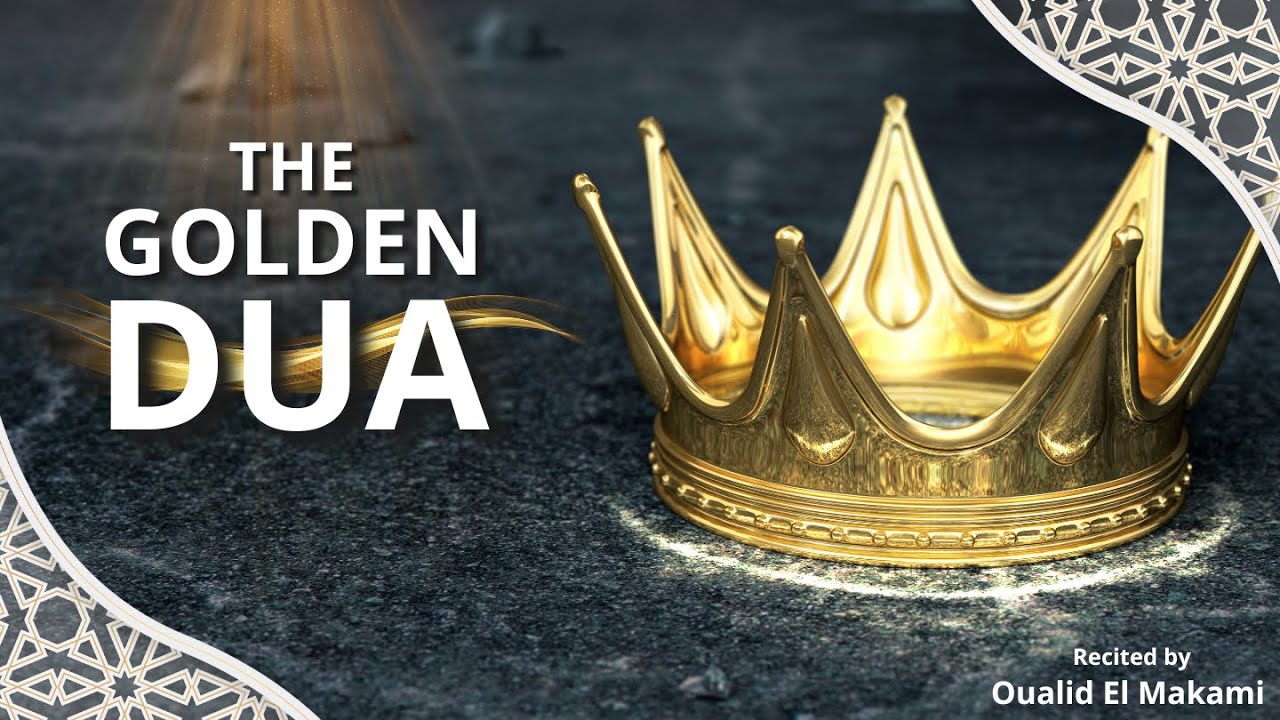
People hoard gold. They keep it carefully, return to it regularly, guard it from loss. Gold holds its value whether times are good or bad. The Prophet Muhammad ﷺ turned to Shaddad bin Aws and said: "If you see people hoarding gold and silver — hoard these words." Not recite. Not memorize. Hoard. Treat them the way people treat the most precious material thing they own.
The dua that follows asks for steadfastness, determination on the right course, all causes of divine mercy and forgiveness, gratitude, excellent worship, a sound heart, a truthful tongue, the good of everything Allah knows, refuge from the evil of everything He knows, and forgiveness for everything He knows. Then it closes with the acknowledgment that makes all the asking correct: "You are the All-Knowing of the unseen."
👑 Golden Dua
wa as'aluka mujibati rahmatik · wa 'aza'ima maghfiratik
wa as'aluka shukra ni'matik · wa husna 'ibadatik
wa as'aluka qalban saliman · wa lisanan sadiqan
wa as'aluka min khayri ma ta'lam · wa a'udhu bika min sharri ma ta'lam · wa astaghfiruka lima ta'lam
innaka Anta 'Allamu al-ghuyub
I ask You for all that necessitates Your mercy, and the firm causes of Your forgiveness.
I ask You for gratitude for Your blessings, and excellent worship of You.
I ask You for a sound heart, and a truthful tongue.
I ask You for the good of what You know · I seek refuge from the evil of what You know · and I seek Your forgiveness for what You know.
Indeed, You are the All-Knowing of the unseen."
The Structure — Four Pairs and a Closing Triple
The capacity to remain firm on the correct position regardless of pressure or temptation
Active commitment to the correct path — not passive guidance but resolved direction
All the causes and conditions that lead to divine mercy — the root before the fruit
The most certain, decisive conditions that make forgiveness determined
The felt acknowledgment that every blessing came from Allah — not a formula but genuine recognition
"Husna 'ibadah" — the beautiful, aware, present-hearted worship that is the highest form of 'ibadah
Free from shirk, hypocrisy, arrogance, jealousy — the only thing that benefits on the Day of Judgment
Speech that matches the inner reality — the most dangerous organ corrected
The Closing Triple — Three "Ma Ta'lam" (What You Know)
Not what I think is good — what You know is good. The asking is surrendered to Allah's knowledge rather than the person's own assessment. Every good Allah knows — all of it — asked for without limitation.
Protection from every harm Allah knows — including harms the person cannot see coming, risks they cannot anticipate, evils not yet visible to them. No limitation of personal foresight.
Not for what I remember — for what You know. Every sin, forgotten or not recognized as sin, the shortcomings in worship, the words said without awareness of their harm. The most complete possible istighfar: open to the full scope of Allah's knowledge.
The closing declaration that grounds everything: You know every good, every evil, every sin — completely and without any gap. I am asking from that knowledge, not mine. Take care of me with what You know.
💛 Why This Dua Is Worth More Than Gold
Gold has value because of what it can purchase — goods, services, security, options. This dua, when made sincerely and consistently, asks for what gold can never purchase.
📌 This is why he told Shaddad bin Aws to hoard these words the way people hoard gold. Not because the words are beautiful — because what they ask for is more valuable than anything gold can purchase. Eleven things. All inaccessible to wealth. All available through this dua, sincerely made and consistently hoarded.
🔍 Key Phrases Explained
"Thabat" — firmness, stability, being unmoveable from the correct position. "'Azimah 'ala al-rushd" — firm determination on the right course, not passive guidance but active commitment. Their placement first is significant: before asking for direction, ask for the capacity to stay on it. The person who knows the right path but cannot stay on it is no better than the one who does not know it. Thabat and 'azimah are the foundation — without them, everything else in the dua is at risk of being lost through spiritual inconsistency.
"Qalb salim" is one of the most important concepts in Islamic spiritual psychology. The Quran declares on the Day of Judgment: "The day when neither wealth nor children will benefit, except one who comes to Allah with a sound heart." (Surah Ash-Shu'ara 26:88-89). A sound heart is free from shirk, hypocrisy, arrogance, and jealousy — the spiritual center from which all good states flow. "Lisan sadiq" — a tongue that speaks truth in every form: factual, moral, spiritual, relational. The Prophet ﷺ said: "Is there anything that causes people to be dragged on their faces into the Fire except the harvest of their tongues?" (Tirmidhi). The two are paired because they train each other: a sound heart produces a truthful tongue, and consistent truthfulness purifies the heart.
Three consecutive phrases all using "ma ta'lam" — what You know. "The good of what You know" — not what I calculate is good, but what You, with Your complete knowledge, know to be good. "The evil of what You know" — protection from every harm including those I cannot see coming, risks I cannot anticipate, evils not yet visible to me. "What You know" for forgiveness — not just what I remember sinning, but what You know, which is everything. Together these three cover the full scope of divine knowledge — good, evil, and sin — none of it limited by the person's own awareness. The acknowledgment closing it — 'Allamu al-ghuyub, the All-Knowing of the unseen — is what validates all three: You know everything hidden. I ask from that knowledge.
🕌 When to Recite the Golden Dua
Every Morning — The Hoarding the Prophet ﷺ Intended
The instruction to "hoard" implies a regular, daily practice. Make the Golden Dua part of your morning adhkar after Fajr — the permanent treasure the Prophet ﷺ described. Not occasionally. Every morning, like a person who checks on their gold.
When You Feel Spiritually Weak or Inconsistent
"Allahumma inni as'aluka al-thabata fi al-amr." When you feel the weakness of inconsistency, when you cannot stay on the correct course — this dua asks for precisely what is lacking. Steadfastness is the first request for a reason.
When You Need Determination on the Right Course
"Wal-'azimata 'ala al-rushd." Before a difficult moral decision, before a moment when you need to choose correctly and hold that choice — ask for 'azimah on al-rushd. The determination that keeps the decision firm.
When Your Heart Feels Hard or Spiritually Distant
"Wa as'aluka qalban saliman." When worship feels mechanical, when connection to Allah feels thin, when the heart has become hard — this is the prescription. Ask directly for the qalb salim. The sound heart is available to ask for.
Before Important Speech or Communication
"Wa lisanan sadiqan." Before an important conversation where truthfulness is tested, before speaking in a situation requiring integrity — ask for the lisan sadiq. The tongue that matches the inner reality in every form of truth.
When You Don't Know What to Ask For
"As'aluka min khayri ma ta'lam." When your needs are unclear, when you cannot articulate what you need — this phrase surrenders the asking to Allah's knowledge. He knows what is good. Ask for that, and trust that His knowledge exceeds your own assessment.
✨ 6 Benefits of the Golden Dua
Not a scholarly opinion, not a general recommendation — the Prophet ﷺ told a specific companion to treat these words as more valuable than gold and silver. This is the highest possible designation for any dua in the Islamic tradition.
Steadfastness, right direction, causes of mercy and forgiveness, gratitude, excellent worship, a sound heart, a truthful tongue — eleven things gold cannot buy. The Golden Dua asks for the entire category of good that wealth is incapable of producing.
"Good of what You know, evil of what You know, forgiveness for what You know." By surrendering all three to Allah's knowledge, the dua covers every good, every harm, and every sin — including the ones the person is unaware of. The most comprehensive coverage possible.
"The day when neither wealth nor children will benefit, except one who comes to Allah with a sound heart." (Surah Ash-Shu'ara 26:88-89). The Golden Dua specifically asks for the qalb salim — the only thing that actually matters when all else fails.
Every pair covers both dimensions: steadfastness AND right course, mercy AND forgiveness, gratitude AND worship, heart AND tongue. No spiritual quality is asked for alone — always paired with its complementary counterpart, making each request complete.
By closing with the declaration that Allah knows all the unseen, the dua anchors every request in His complete knowledge rather than the person's limited one. The most honest possible close — acknowledging that what is being asked for is entirely in the hands of the One who knows everything.
❓ Frequently Asked Questions
The Treasure He Told Us to Store Is Not in the Material World
People hoard gold because they know its value. They keep it carefully, return to it, do not let it slip away through carelessness. The Prophet ﷺ looked at a companion and said: when you see people doing that — do this instead. Hoard these words.
Steadfastness when everything is shifting. Determination on the right course when the world offers many wrong ones. Causes of mercy when mercy is what you need most. The firm causes of forgiveness when you have fallen. Gratitude when it is easy to forget. Excellence in worship when it is easy to go through the motions. A sound heart when the world is designed to make the heart sick. A truthful tongue when lying is often easier.
The good of everything Allah knows. Protection from the evil of everything He knows. Forgiveness for everything He knows. And the anchor: "You are the All-Knowing of the unseen."
May Allah give us thabat in all our affairs, 'azimah on the right course, every cause of His mercy and forgiveness, shukr for His blessings, husn in our worship, a sound heart, and a truthful tongue. May He give us the good of what He knows and protect us from the evil of what He knows. And may He forgive us for everything He knows — for He is 'Allamu al-ghuyub.